Buckets: what "3.0 m³" actually buys you
A bucket rating is a volume under assumptions. Change the material and you have changed the machine.
Bucket capacity is printed like a fact. It is a volume, measured to a standard, under assumptions about what you are putting in it. All three parts of that sentence matter.
Struck, heaped, and honest
Struck capacity is the bucket filled level to its edges. Heaped capacity assumes material piled above the rim at a standard angle. Heaped is the bigger number, so heaped is the number you see.
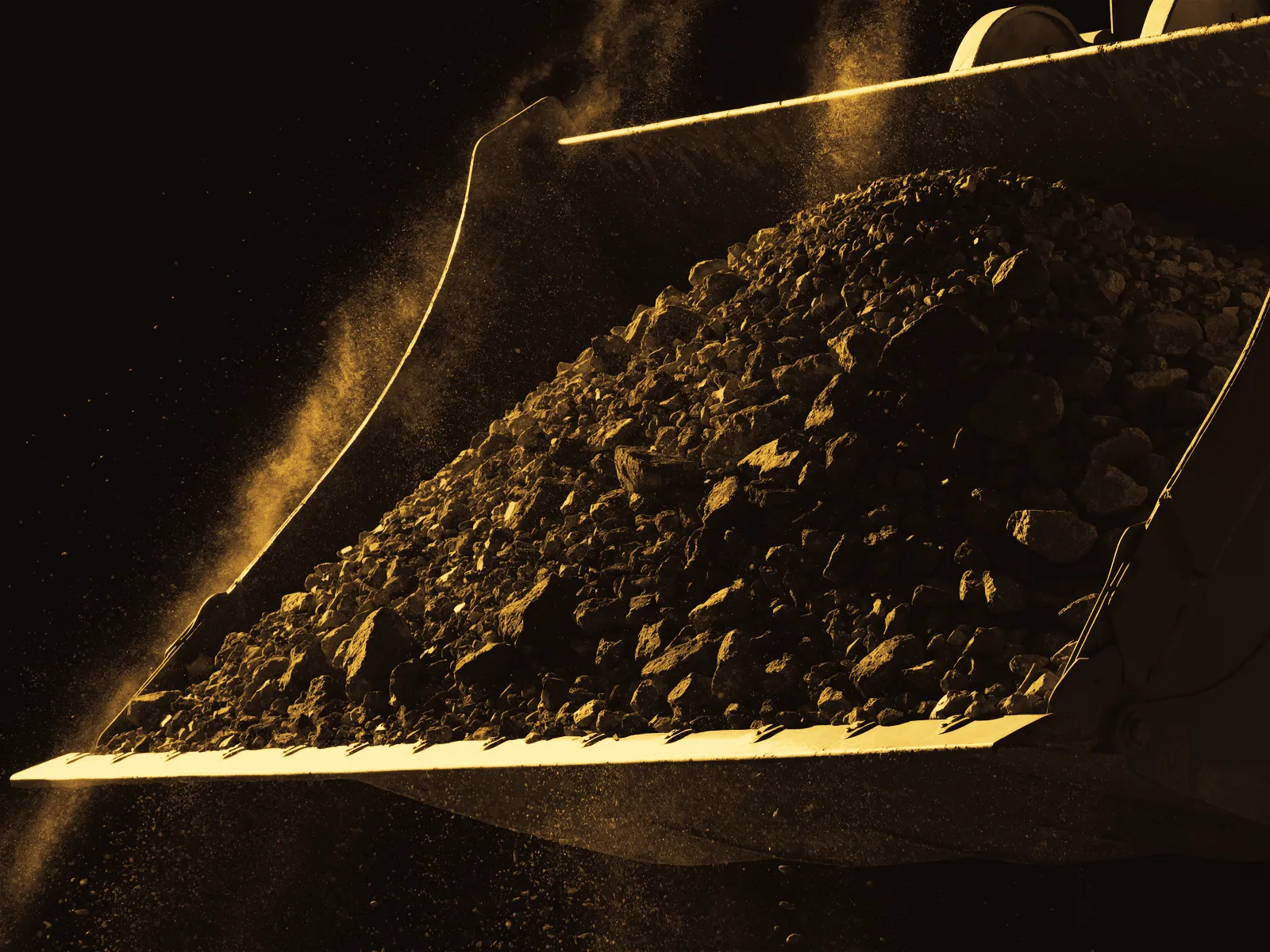
Heaped is achievable with material that piles. It is not achievable with something wet that slumps flat, and it is not achievable with shot rock that bridges and leaves voids. The rating did not lie. It just described a day you are not having.
Volume is not mass
The machine does not lift cubic metres. It lifts kilograms. Material density is what connects the two, and the range is wide: dry aggregate, wet sand, and broken rock all weigh very different amounts in the same bucket.
This is why a bucket sized for one material becomes a liability on another. Fill a light-material bucket with something dense and you have not got a bigger load. You have got a stability problem and a slow cycle.
Fill factor is the number nobody quotes
The real load is the rating times how full the bucket actually gets. Loose, free-flowing material fills a bucket well. Sticky material packs in the corners and comes out in lumps. Blocky rock leaves air.
- Start from the rated capacityKnow whether the figure you have is struck or heaped.
- Apply an honest fill factorBased on what you are actually loading, not on the brochure photograph.
- Multiply by densityNow you have a mass. This is the number the machine cares about.
- Check it against the machineLift capacity and stability at the reach you will use — not at the machine's best case.
- Then check it against the truckWhole passes. Three to five. The bucket serves the truck, not the brochure.
Bigger is not more
An oversized bucket that the machine cannot fill or cannot lift at reach moves less material than a right-sized one that fills every cycle. You bought volume and paid in cycle time, fuel, and breakout. It is the most common way to make a good machine slow.
Tell us the material and the truck. That is what sizes a bucket. The cubic metres follow.