Ground pressure: why your machine sinks and the next one does not
Two machines, same weight, different day. The number that explains it is not on the sales sheet.
A heavier machine crossed the same soft ground and floated. Yours sank. Weight is not what decides that. Pressure is.
Weight is the load. Pressure is the load per footprint.
Ground pressure is the machine's weight spread across the area actually touching the ground. Same weight on a bigger footprint means less pressure at any one point. That is the whole idea, and it explains most of what you see on a wet site.
It is why a tracked machine crosses ground a wheeled machine of the same weight will not. Tracks lay down a long, wide contact patch. Tyres concentrate the same tonnes into four small ones.
Where it shows up
- Fresh fill and recent placement. It has not been compacted yet, and it will take an imprint from anything.
- Saturated ground. Water carries no load. Coastal spring is a long lesson in this.
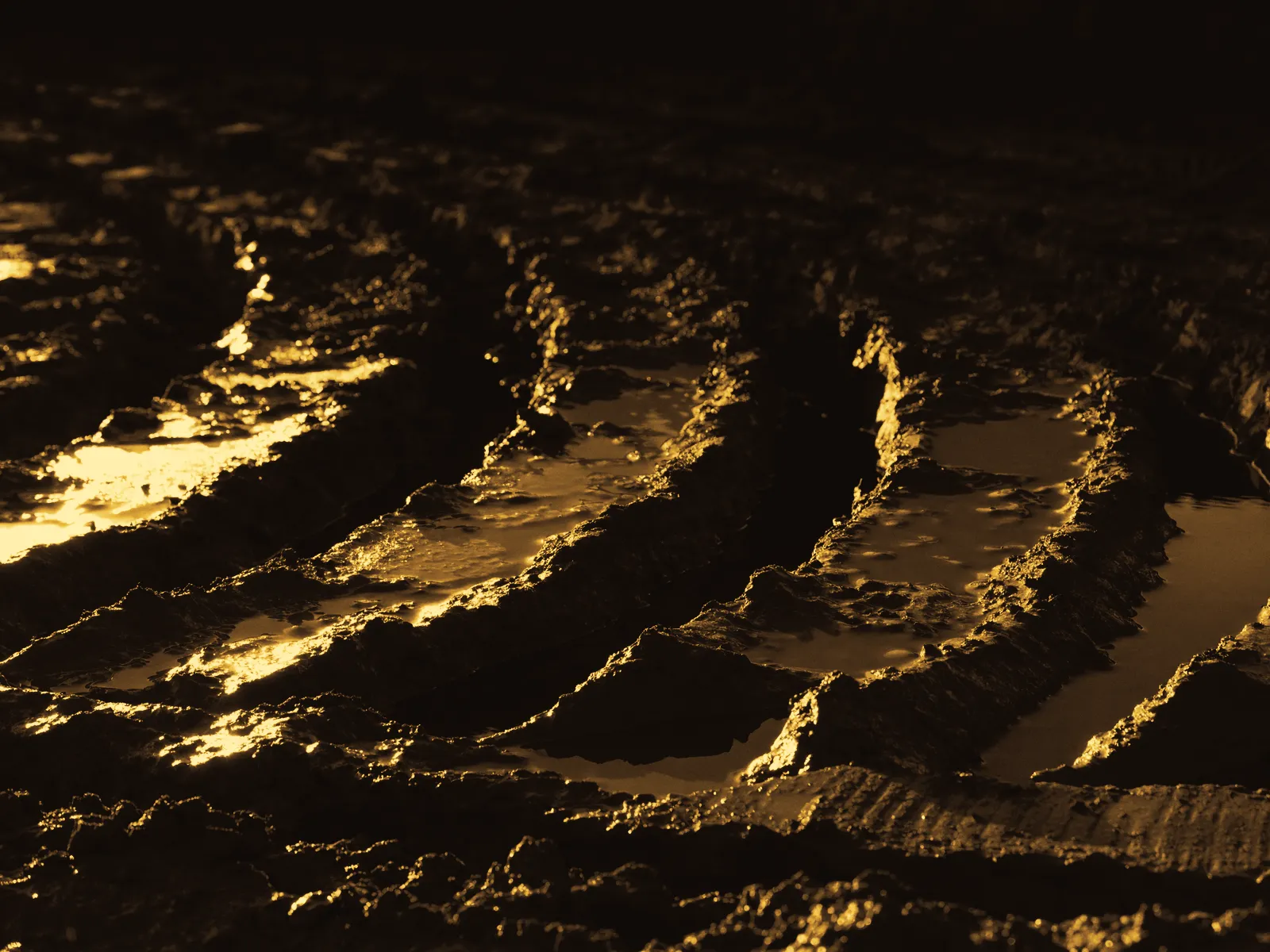
- Anything you cross repeatedly. Pressure that is fine once is not fine on the fortieth pass — that is rutting, and rutting is a route that stops working.
- Over services. The trench you backfilled has less bearing capacity than the ground beside it.
What actually changes it
- Tracks over tyresThe biggest single lever. It is why compact track loaders exist.
- Wider pads or wider tyresMore footprint, less pressure. It costs you some ground clearance and some manoeuvrability.
- A lighter machineThe obvious one, and often the right one. The smallest machine that does the job is usually also the one that can get to it.
- Mats and a made-up routeSpread the load with something other than the machine. Cheaper than a recovery, every time.
- Do not load it at the worst momentA loaded bucket at full reach moves weight forward. Pressure is not evenly spread, and it changes as the machine works.
The trade you are making
Low ground pressure is not free. Tracks are slower on hard surfaces, cost more to replace, and do not like turning on asphalt. Wheels are quick, cheap to run, and go home on their own tyres. If your site is firm, the wheeled machine is usually the better machine, and paying for flotation you do not need is just paying.
Ask before you book
Tell us the ground, not just the job: what it is, how wet it has been, and how many times you have to cross it. Operating weight is on every unit page. The right footprint under that weight is the conversation.