
The wear parts that cost you the most
Wear items are not failures. They are a schedule. The expensive ones are the ones you ignore.
A wear part is supposed to wear out. That is its job. The cost is not in replacing them — it is in replacing them late, when they have taken something else with them.
Ground engaging tools
Teeth and cutting edges are consumables. Run them past their life and you are no longer wearing the tooth, you are wearing the adapter and then the bucket itself. A tooth is a part. A bucket lip is a repair.
Worn GET also costs you on every cycle before it fails. Rounded teeth do not penetrate, so fill time goes up and breakout goes down. You pay for that in fuel and cycles long before you pay for it in steel.
Pins and bushings
The slop you can feel in a linkage started as a film of grease that was not there. Once there is movement, the wear accelerates: the pin wears the bushing, the bushing lets the pin move, and eventually it is the boss in the boom that is worn — which is welding, not parts.
Undercarriage and tyres
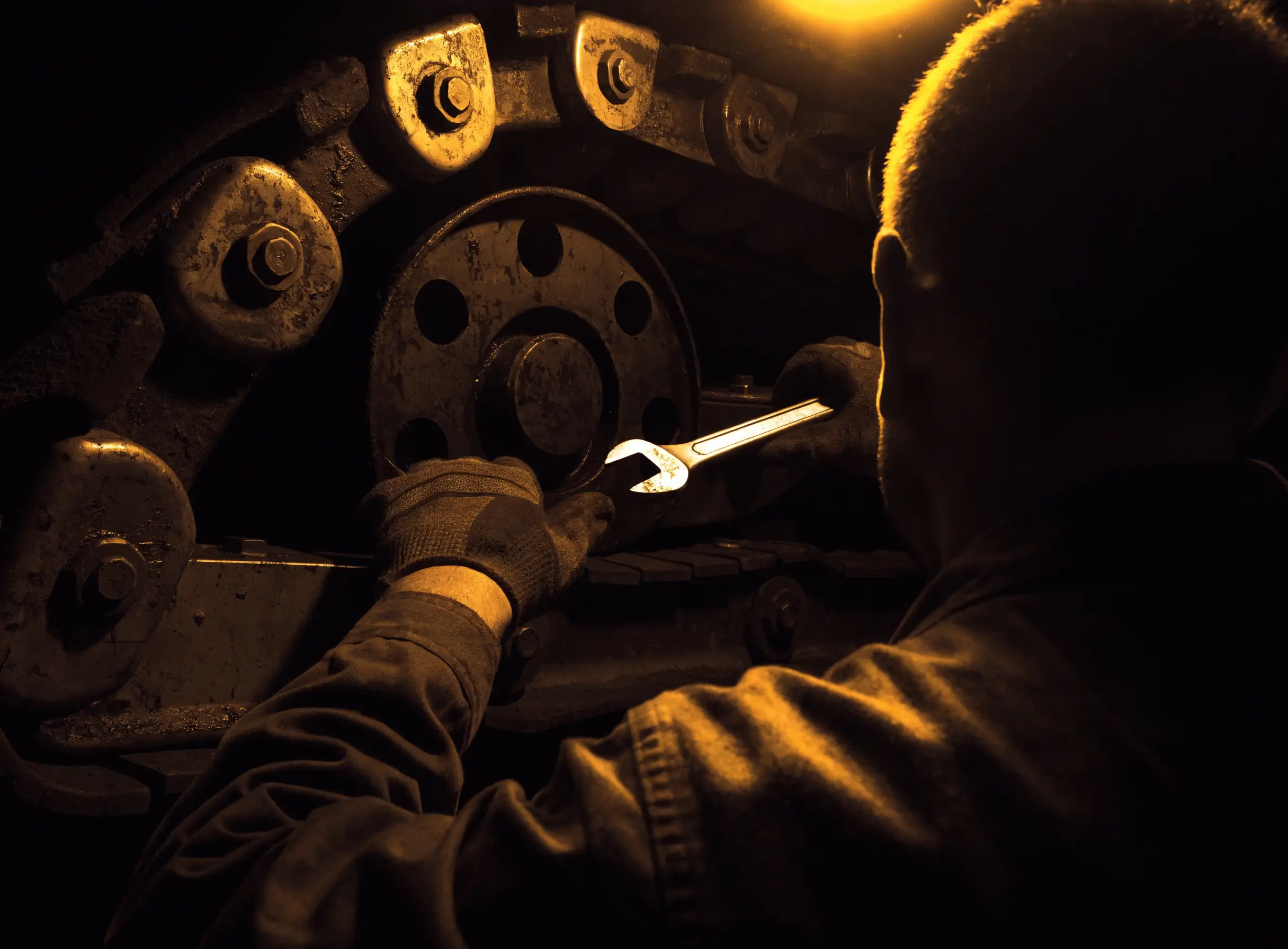
On a tracked machine the undercarriage is a large fraction of the machine's lifetime running cost. Most of what kills it is not hours. It is mud left to pack and freeze, tension set wrong, and turning on abrasive hard ground.
- Clean the undercarriage. It is the cheapest maintenance there is and almost nobody does it.
- Check tension against the book, not by eye. Too tight wears everything faster than too loose.
- Uneven wear means alignment. Replacing the set without fixing the cause buys you the same bill again.
Filters and fluids
The cheapest parts on the machine, guarding the most expensive ones. A hydraulic filter costs a fraction of a pump. A neglected air filter is how dust gets to an engine. There is no clever insight here — it is just the highest return on money in the entire maintenance schedule.
Hoses and seals
Leaks start small and announce themselves. A weeping seal is telling you where the next failure is. The cost of listening is an hour. The cost of not is a hose letting go at full pressure with a load up.
What we keep on the shelf
Filters, GET and cutting edges, pins and bushings, electrical, hydraulics. Deliberately: these are the parts that turn into downtime, and downtime is the thing a parts shelf actually buys.
The rule
Replace wear parts on a schedule you choose. Otherwise the machine chooses, and it will choose the worst week of your job.